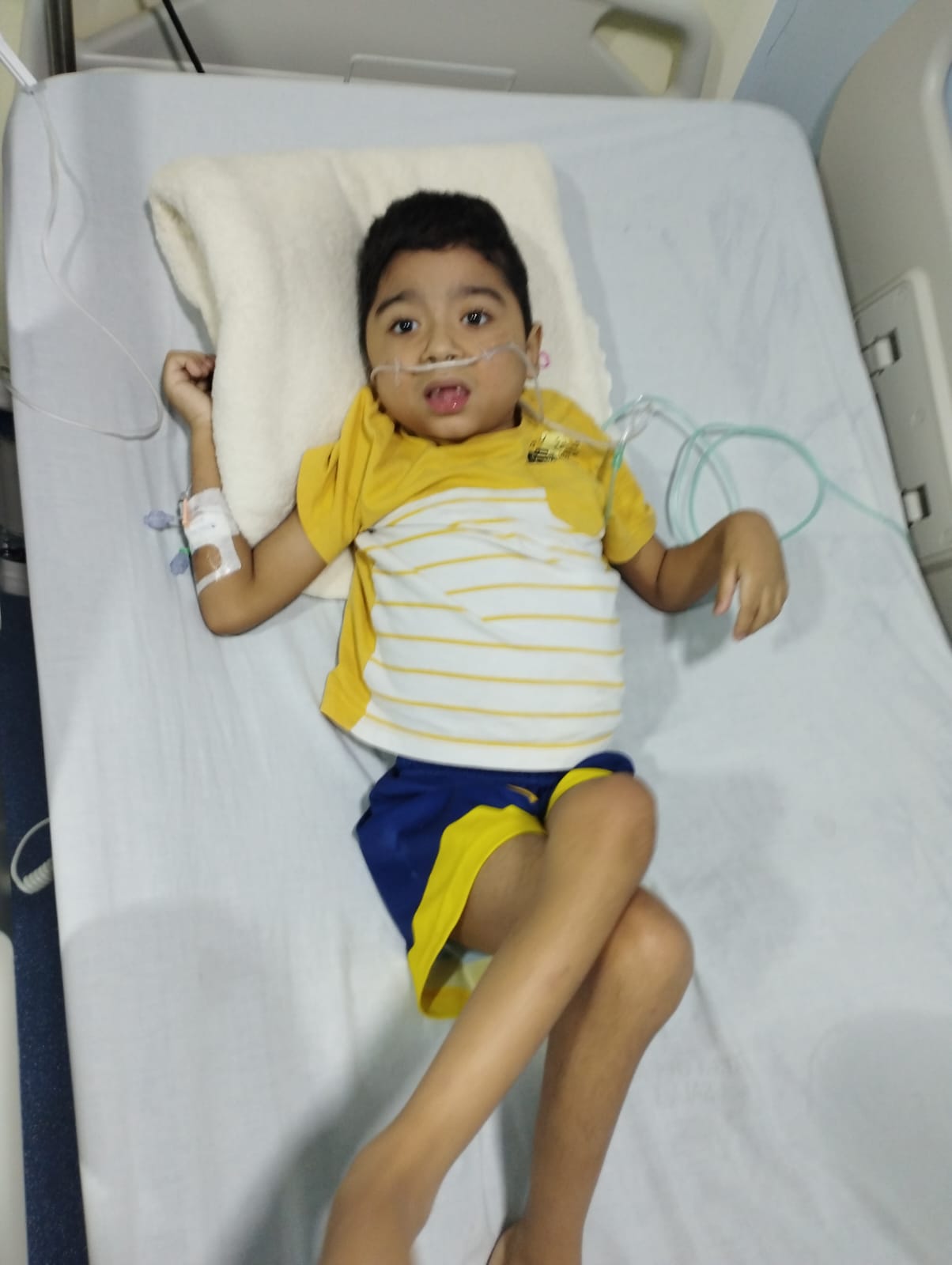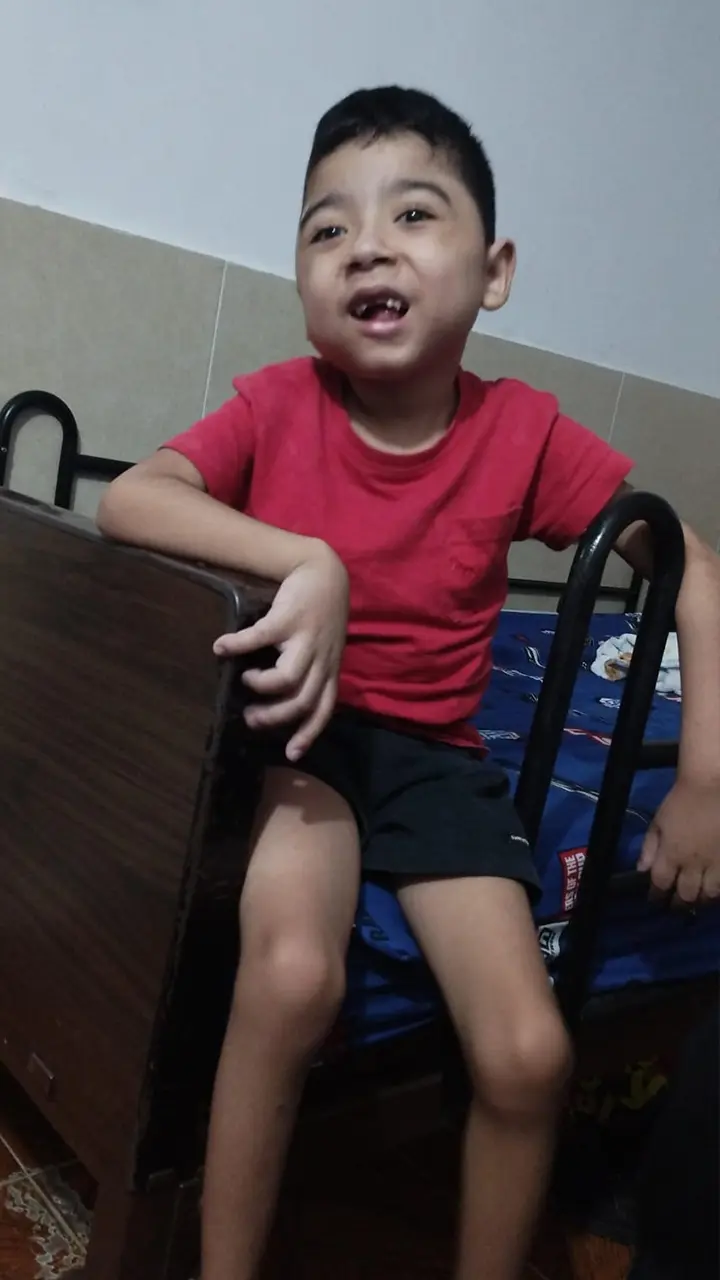
Iham David Bracho Zúñiga is a 6-year-old boy living in the city of Cartagena, in the Ciudadela 2000 neighborhood. He lives with his mother, who is his primary caregiver and who, along with his family, has accompanied every stage of his journey with love, effort, and resilience. To support the household, his family sells desserts, an activity they depend on with limited income.
His story begins with a pregnancy that proceeded normally with up-to-date medical check-ups until week 35, when his mother was diagnosed with preeclampsia, leading to the end of the pregnancy. A cesarean section was scheduled for week 36, and the birth occurred without apparent complications. Iham was born weighing 2,740 grams and measuring 51 centimeters, and was discharged a few days later along with his mother.
However, just 15 days after birth, health difficulties began to emerge, starting with nasal congestion and a lack of appetite. Initially, it was treated as a viral condition, but his state worsened rapidly, presenting episodes of cyanosis where he turned blue while coughing. He was rushed to a medical center where he was diagnosed with bronchiolitis.
Hours after admission, he suffered a cardiorespiratory arrest, forcing an immediate transfer to the intensive care unit. During his stay, he suffered two additional arrests and required intubation for approximately 20 days. In total, he remained in the ICU for nearly four months, facing a complex medical process that resulted in significant neurological consequences.
As a result of this situation, Iham was diagnosed with cerebral palsy, in addition to a swallowing disorder that prevents him from feeding orally, and bronchopulmonary dysplasia, a condition that affects his respiratory system. He currently has a gastrostomy tube and presents hypotonia, which significantly limits his mobility and prevents him from walking independently.
Throughout his journey, his mother has faced multiple challenges, including constant management within the healthcare system to guarantee access to therapies, treatments, and medical services—a path that has involved great effort, paperwork, and the need to resort to different mechanisms to obtain the required care.
At home, his family performs stimulation activities with available resources. These include standing exercises supported by a chair, bed rails, or gates; sensory stimulation with household items like kitchen utensils; and recreational activities such as dancing, which also strengthen their emotional bond and motivate his participation.
Despite all the difficulties, his mother highlights her son’s strength and his desire to move forward. For her, every attempt at movement, every effort to support himself, or every gesture of motivation represents a demonstration of his abilities and everything he can achieve with the right support.
Having a rehabilitation gym at home would be a fundamental tool for his journey, as it would allow him to perform his therapies safely and constantly without the need for travel, also reducing the risk of exposure to respiratory infections that could affect his health. This device would also provide him with greater stability to work on his posture, facilitate safer feeding, and strengthen his physical development process.
Iham’s story is one of struggle, faith, and perseverance, in which the love of his mother and family has been the motor to keep moving forward. With hope, they continue to believe that, with the right tools and necessary support, he will be able to advance in his journey and reach new milestones in his quality of life. 💛